
Integration with TrueConf Server
Expand the capabilities of your solution through integration with a range of external devices, services, and platforms, ensuring seamless compatibility for various use cases.

Expand the capabilities of your solution through integration with a range of external devices, services, and platforms, ensuring seamless compatibility for various use cases.
and other Chromium-based ones
and others that support the iCalendar standard
and others that support the ICAP protocol
and others that support the LDAP protocol
An artificial intelligence-based conference transcription server guarantees secure data processing within the corporate network.
TrueConf Calendar Connector provides simple and seamless integration between Microsoft® Exchange and TrueConf Server. View Outlook events in TrueConf client applications and schedule video conferences directly from your email calendar!
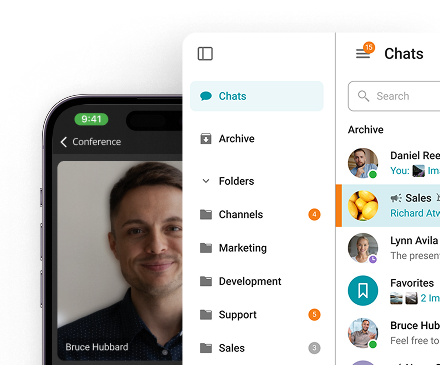
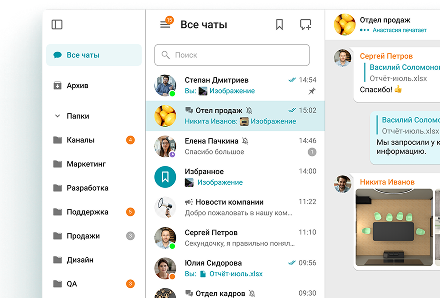
Develop multifunctional chatbots to automate workflows and integrate them into your TrueConf corporate communications, enhancing efficiency and improving the quality of team collaboration.
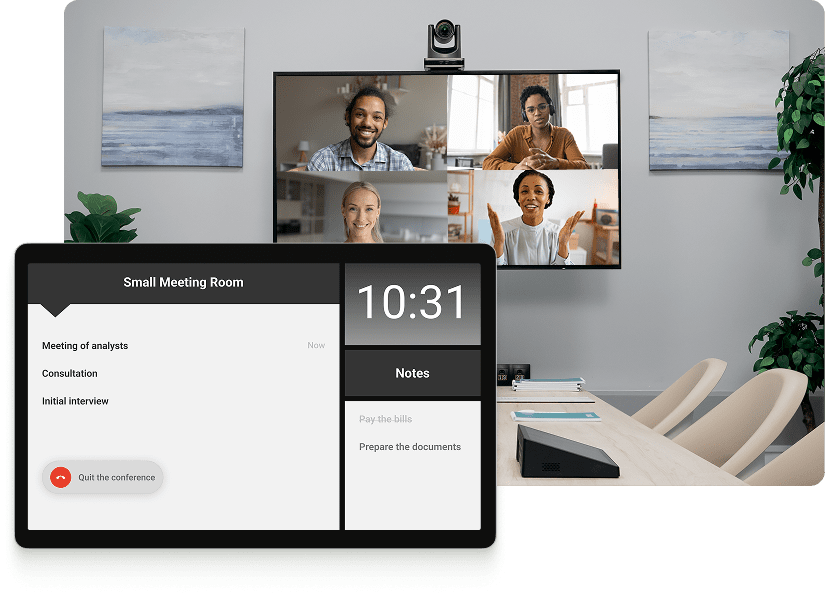
Maintain continuity and efficiency in communication, working both in compact meeting rooms and large conference halls, thanks to the seamless integration of TrueConf video conferencing solutions.
Yes. TrueConf Server supports SMTP integration for sending email notifications and system messages through an external mail server.
Administrators can specify the SMTP server address, port, secure connection type, authentication credentials, sender address, and email templates. TrueConf Server also supports meeting scheduling with Microsoft Exchange through TrueConf Calendar Connector.
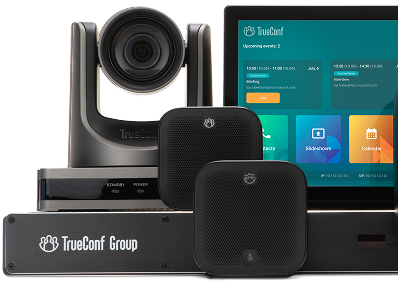
Yes. TrueConf Server includes a built-in SIP/H.323/RTSP gateway for connecting third-party video conferencing endpoints.
SIP and H.323 room systems can join conferences hosted on TrueConf Server. TrueConf Server also supports integration with MCUs, PBXs, H.323 gatekeepers, Asterisk, and Cisco UCM via supported protocols.
Yes. TrueConf Server supports conference streaming via RTSP and RTMP.
Administrators can broadcast TrueConf conferences to external streaming platforms that accept RTMP or RTSP streams, including YouTube and other live streaming services. TrueConf Server also supports RTSP connections for IP cameras and external media sources.
Yes. TrueConf Server supports integration with external learning platforms through its API, SDK, and web conferencing tools.
Developers can use TrueConf Server API and SDK to add video meetings, virtual classrooms, user management, and conference access workflows to Moodle or another LMS.
TrueConf Server supports SSO scenarios through LDAP, Active Directory, Kerberos, NTLM, and OAuth 2.0 providers.
For SAML-based authentication, the authentication flow should be configured through an external identity provider that supports SAML and connects to TrueConf Server through the available SSO infrastructure.
Yes. TrueConf Server is a self-hosted video conferencing platform for deployment on an organization's own server or private infrastructure.
TrueConf Server supports SSO through LDAP and Active Directory integration. Domain users can sign in with corporate credentials, and automatic authorization is available in supported domain environments.
Yes. TrueConf Server supports two-factor authentication through external identity providers.
Administrators can enable 2FA/MFA scenarios by connecting TrueConf Server to providers such as AD FS, Keycloak, or another OAuth 2.0 provider that enforces additional verification methods.
Yes. TrueConf Server provides API access for custom integrations and automation.
Developers can use TrueConf Server API to manage users, conferences, applications, and server resources. TrueConf also provides SDKs for embedding video conferencing features into custom desktop, mobile, and web applications.